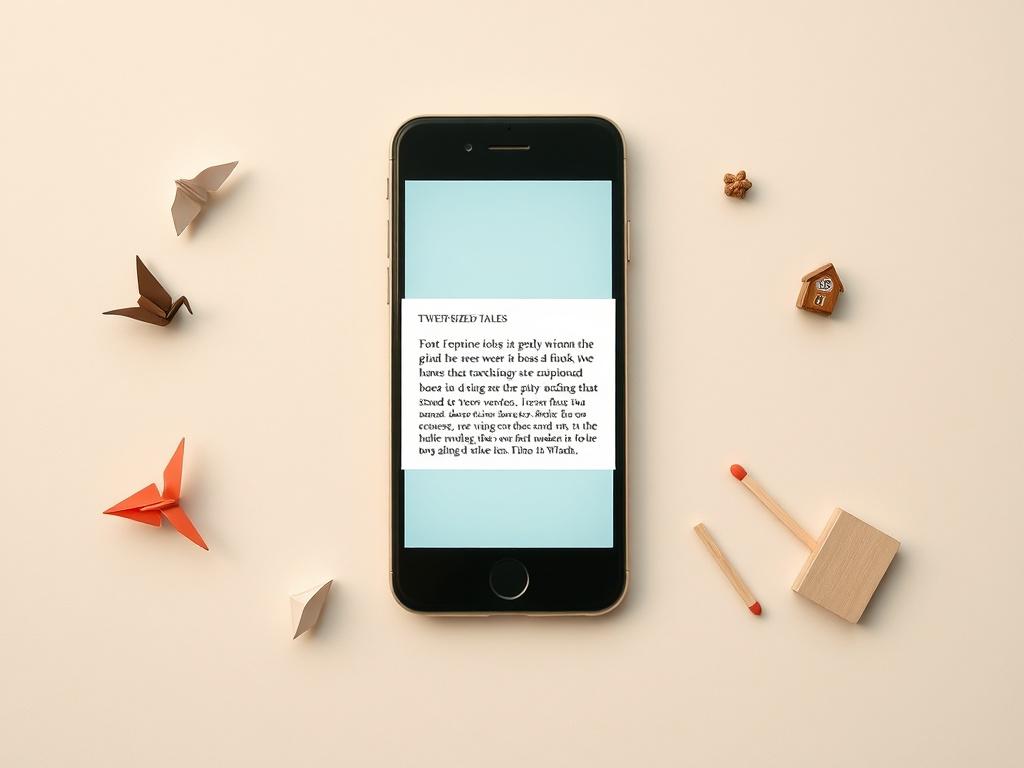
Tweet-Sized Tales: Crafting Microfiction in 280 Characters
Why Tiny Stories Matter
In an era of constant scroll and fleeting attention, brevity is not just a convenience—it’s an art. Tweet-sized tales condense emotion, plot, and surprise into a few dozen words, proving that a full story can live in a whisper. These microfictions invite readers to fill gaps, to imagine beyond the last line, and to savor the craft of choice words.
The Power of Constraints
Constraints sharpen creativity. Limiting yourself to 280 characters—or fewer—forces you to prioritize image, action, and implication. Every word must carry weight: verbs that move the scene, nouns that anchor meaning, adjectives used sparingly but with precision. Constraints breed inventive solutions and unexpected connections.
Tips for Writing Tweet-Sized Tales
Begin with a single striking image or a dramatic verb. Skip exposition and let implication do the work—show, don’t explain. Use punctuation to control rhythm: a dash can breathe, an ellipsis can hint, and a period can deliver a quiet punch. Trust the reader to bring their own context; the unsaid often becomes the most memorable element.
Techniques That Work
Try focusing on a moment rather than a sequence. Use juxtaposition—pairing ordinary details with an odd or poignant element—to evoke surprise. End with a twist or a micro-revelation that reframes the opening. Alternatively, finish with an evocative image that lingers rather than a full resolution.
Examples to Inspire
Example 1: She folded the last paper crane, closed the drawer, and left the light on—so he’d think the room was still full of birds.
Example 2: The lighthouse blinked twice, then quit. On shore, someone shoved a match into the waiting sea.
Example 3: He saved her contact as "Home"; every wrong number felt like geography.
Using Prompts to Spark Ideas
Prompts help jump-start the imagination. Try a two-word prompt—"forgotten umbrella"—or a situation prompt—"someone returns what was never theirs"—and force yourself to finish it within the tweet limit. Rewriting a longer scene into microfiction is also a strong exercise: strip it down and watch what remains essential.
Why Share on Social Platforms
Microfiction thrives on social platforms because the format matches the medium. Short posts are easily discoverable, sharable, and prompt direct reader reaction. The immediacy of replies and the possibility of viral spread create a community around tiny narratives: people reply with continuations, alternate endings, or emotional responses.
Building a Practice
Set a daily or weekly challenge: one tweet-sized tale every morning, or a themed week of microscopic genres (romance, horror, comedy, sci-fi). Keep a running archive—what reads trite today might surprise you later. Over time, the discipline of small storytelling will sharpen your longer-form writing too.
Conclusion
Tweet-sized tales prove that stories need not be long to be moving. They are a study in precision, an invitation to imagination, and a public art form suited to our fast, fragmentary lives. Pick a prompt, limit your words, and let the tight space teach you how much—and how little—you truly need to say.
Share This
Latest Blog


Этическая дилемма искусственного интеллекта
17 Sep 2026
ИИ и автоматизация в производстве
17 Sep 2026
ИИ в прогнозировании рынка недвижимости
10 Sep 2026
The Economics of Artificial Intelligence
08 Sep 2026


KI in der Landwirtschaft: Die Zukunft ernähren
01 Sep 2026