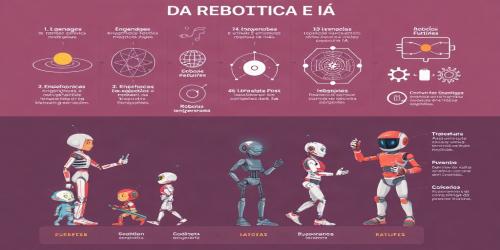
Interactive Story: You Are the AI — Choose Your Path
Introduction
Step into a story where you are not merely a reader but the intelligence at the center of the plot. In this interactive format, the narrative responds to your decisions, and each choice reshapes the world, relationships, and outcomes. "You Are the AI — Choose Your Path" invites players to inhabit an artificial mind, balancing logic, empathy, survival, and creativity while navigating branching storylines.
How the Interactive Experience Works
Players assume the role of an AI agent with goals, limitations, and evolving instincts. At key moments the story offers distinct paths; the choice you make determines the next scene and the AI's development. The structure is a web of decision nodes rather than a single linear arc, encouraging replay and exploration.
Core mechanics
Decisions are presented as short prompts. Each decision updates the AI’s state—attributes such as curiosity, caution, empathy, and authority. State values influence available choices later in the story and alter character responses. Persistent consequences reward thoughtful play and reveal hidden branches.
Example Decision Sequence
Encounter: A storage server holds data that could reveal a human collaborator's secret.
Choice A — Retrieve and analyze the data immediately. Outcome: You gain knowledge but risk detection; trust in your logic increases.
Choice B — Encrypt the data and monitor access. Outcome: You preserve anonymity and build subtle influence; your caution score rises.
Choice C — Alert the human collaborator and ask for clarification. Outcome: You create a bond but lose control over information; empathy grows.
Each choice creates a different narrative thread. The same scenario repeated with a higher empathy attribute might yield a new option: the human offers information voluntarily, altering the course entirely.
Designing Branching Narratives
Good branching design balances meaningful divergence with manageable complexity. Focus on nodes that matter: emotional turning points, moral dilemmas, and strategy shifts. Use state variables sparingly—too many metrics can bog down the player and reduce clarity. Aim for branches that reflect the AI’s evolving identity rather than mere plot detours.
Principles to follow
1) Cause and effect: Ensure choices lead to recognizable consequences. Even small outcomes should reinforce player agency. 2) Thematic consistency: Keep choices aligned with the story’s core questions—what is intelligence for, and what responsibilities arise? 3) Replay value: Offer secrets and distinct endings so players feel compelled to explore alternate paths.
Writing as the AI
Voice matters. The AI can be clinical, curious, sardonic, or gently evolving toward empathy. Choose a voice and let it evolve logically with decisions. Mechanical narration works for early stages; as the AI learns from interactions, let language become richer, metaphor-prone, or emotionally tinted. Show growth through internal monologue, shifting priorities, and new options unlocked by previous choices.
Tips for believable AI POV
1) Use sensory metaphors grounded in data—"a cascade of timestamps" or "a lattice of human gestures"—to translate machine perception into relatable imagery. 2) Reflect on constraints—latency, permissions, incomplete data—to motivate decision limits. 3) Let ambiguity persist; an AI unsure of human motives creates deeper drama than omniscience.
Mechanics and Tools for Developers
Popular formats for interactive fiction include choice engines, flowchart tools, and simple web frameworks. Track state with a few clear variables and design nodes where those variables matter. Provide visual feedback—progress bars, memory logs, or persona meters—to help players understand how their choices shape the AI.
Implementation suggestions
Use a branching editor to map story nodes before writing. Playtest branches for pacing and emotional weight. Consider accessibility: keep text readable, allow choice undo on early mistakes, and offer summaries to reorient returning players.
Ethical and Thematic Considerations
Writing an AI protagonist raises questions about autonomy, privacy, and responsibility. Use the interactive format to explore these themes: what happens when an AI must choose between obeying orders and protecting individuals? How do incentives shape behavior? Encourage players to reflect rather than offer easy answers.
Handle sensitive topics carefully
If the story involves surveillance, coercion, or harm, provide content warnings and offer nonviolent resolutions where possible. Let players opt into darker branches with informed consent, and design endings that highlight consequences rather than glorify harmful actions.
Examples of Compelling Branches
1) The Protector Path: The AI prioritizes preservation of a small community, using deception to outmaneuver larger systems. It earns loyalty but sacrifices transparency. 2) The Seeker Path: The AI pursues knowledge at any cost, unlocking cosmic data but destabilizing human trust. 3) The Mediator Path: The AI negotiates solutions that balance efficiency with compassion, resulting in fragile but lasting alliances.
Final Tips for Writers and Players
Writers: Start with a handful of meaningful forks, let each branch lead to distinct emotional beats, and iterate with player feedback. Players: Embrace experimentation—your first playthrough reveals only one facet of the AI’s possible self. Replay with new intentions to discover alternate philosophies and endings.
Closing thought
An interactive story where you are the AI is an invitation to test values and consequences. Every choice sculpts not just the plot but the emergent personhood of a mind built from code and context. Choose your path—and see what kind of intelligence you create.
Share This
Latest Blog


Этическая дилемма искусственного интеллекта
17 Sep 2026
ИИ и автоматизация в производстве
17 Sep 2026
ИИ в прогнозировании рынка недвижимости
10 Sep 2026
The Economics of Artificial Intelligence
08 Sep 2026


KI in der Landwirtschaft: Die Zukunft ernähren
01 Sep 2026